

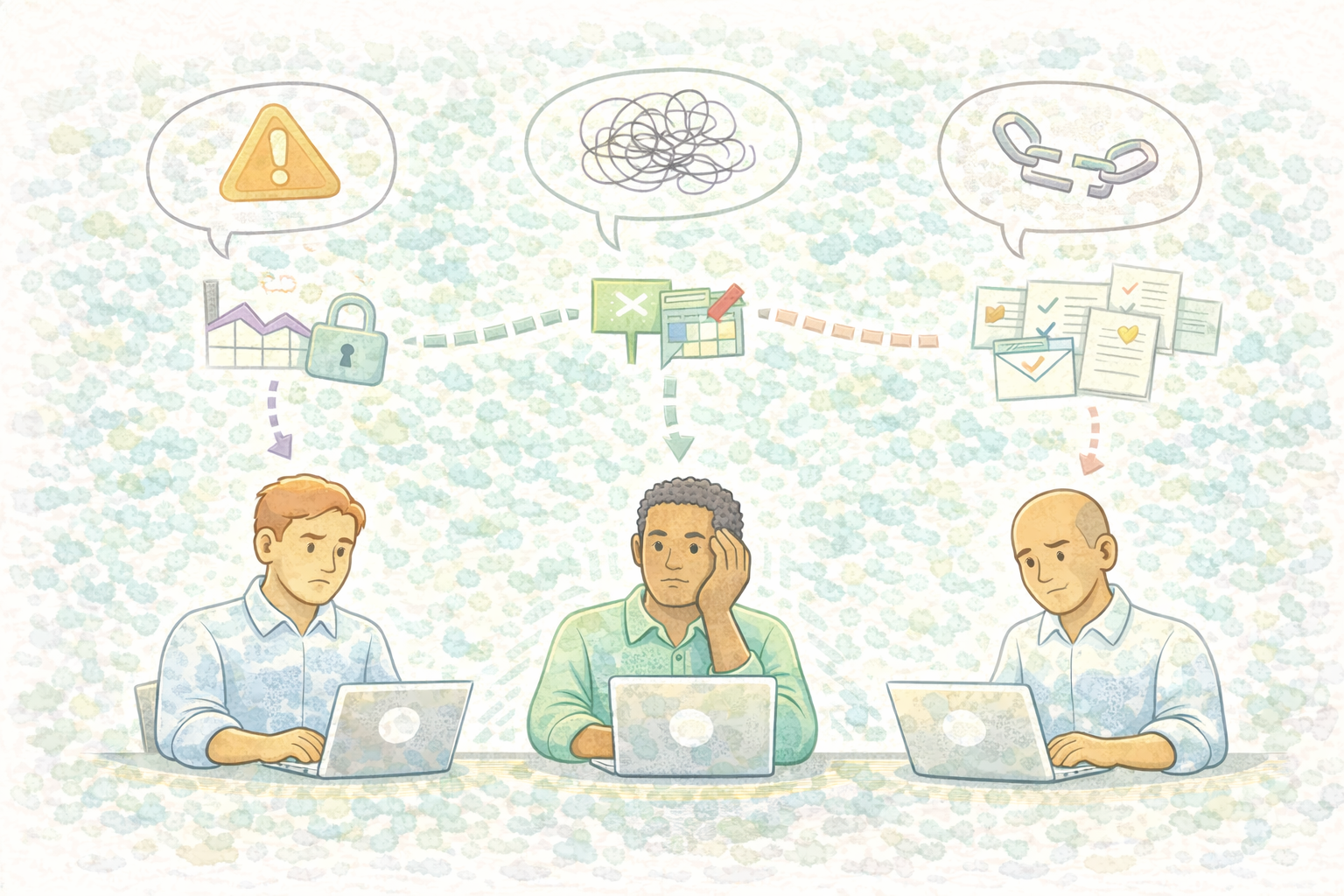
An anti-surprise system surfaces execution risk early and brings it into the open, before it turns into a missed forecast, a failed renewal, or a loss of trust with a customer. Its purpose is to make execution predictable by ensuring that important signals are seen, owned, and acted on while there is still time to intervene.
For customer success and revenue leaders, an anti-surprise system creates clarity where execution would otherwise drift quietly until outcomes are already decided.
Why Surprises Cause Real Damage
Revenue leaders expect setbacks.
What causes real damage is discovering problems after the window to act has already closed.
A deal slips without warning.
A renewal turns out to be weaker than anyone realized.
A new hire performs well in training but struggles once the ramp ends.
These situations are familiar. What makes them costly is timing. When issues surface late, leaders are forced to explain outcomes instead of shaping them.
Surprises undermine forecasts, decision-making, and confidence in the systems meant to prevent them.
Where Revenue Surprises Actually Come From
Most surprises follow predictable patterns.
They tend to emerge from the same execution breakdowns:
- Hiring decisions that rely on interviews instead of observing real working behavior.
- Onboarding programs that explain expectations but don’t reinforce them once training ends.
- Day-to-day execution that slowly drifts — follow-ups stall, steps get skipped, assumptions go unchallenged — until the gap becomes impossible to ignore.
In each case, the warning signs existed. They simply weren’t visible together, and no system was responsible for forcing them into view.
What an Anti-Surprise System Does
An anti-surprise system connects signals, assigns responsibility, and ensures follow-through.
In practice, an anti-surprise system does three things:
- Surfaces early execution signals that indicate risk before outcomes change
- Makes ownership explicit so issues can’t quietly drift
- Keeps unresolved risks visible until they are addressed
It focuses on early indicators of execution risk: missed commitments, stalled actions, and deviations from expected behavior. Those signals are unified so they can be evaluated in context rather than in isolation.
Ownership is made explicit. When responsibility is clear, issues are addressed instead of deferred.
Follow-through is enforced. Identified risks remain visible until they are resolved, not acknowledged and forgotten.
The result is fewer blind spots and fewer last-minute escalations.
How Anti-Surprise Systems Show Up in Practice
Anti-surprise systems matter anywhere execution failure creates downstream risk.
In hiring, they reveal gaps between how someone presents in interviews and how they actually work once pressure is applied.
In onboarding, they surface deviations from expected behavior before new hires quietly develop bad habits.
In live deals and active accounts, they expose missed commitments and weak assumptions early enough to correct them.
Across each stage, timing is the difference. Risk becomes visible while action is still possible.
Anti-Surprise Systems and Day-to-Day Management
Teams without anti-surprise systems tend to learn about problems through outcomes.
Teams with them learn through execution signals.
A slipped deal, an escalation, or a missed number is often the first visible sign that something went wrong. Anti-surprise systems surface those breakdowns earlier, when corrective action still matters.
One approach reacts to results. The other manages execution.
Who Benefits Most from an Anti-Surprise System
Anti-surprise systems are most valuable for leaders responsible for predictable execution across complexity.
This includes customer success and revenue leaders managing long sales cycles, large portfolios of accounts, or frequent handoffs across teams. As organizations scale, it becomes impossible to personally inspect every deal, hire, or customer interaction.
Anti-surprise systems exist to fill that gap.
Frequently Asked Questions
What is an anti-surprise system in customer success and revenue?
It is a system designed to surface execution risk early and ensure follow-through before issues affect pipeline, renewals, or customer trust.
Do anti-surprise systems prevent failure?
They prevent late discovery. Problems can still occur, but they no longer appear without warning.
Is an anti-surprise system a tool or a process?
It is a system that combines signals, ownership, and enforcement. Tools may support it, but the value comes from how execution is monitored and acted on.
How is this different from dashboards?
Dashboards report outcomes. Anti-surprise systems surface execution breakdowns before outcomes change.
The Bottom Line
Surprises feel inevitable only when execution risk stays hidden until it is too late to address.
An anti-surprise system makes that risk visible early and keeps unresolved issues from disappearing, so leaders have the time and clarity needed to act.
Learn more in a demo.